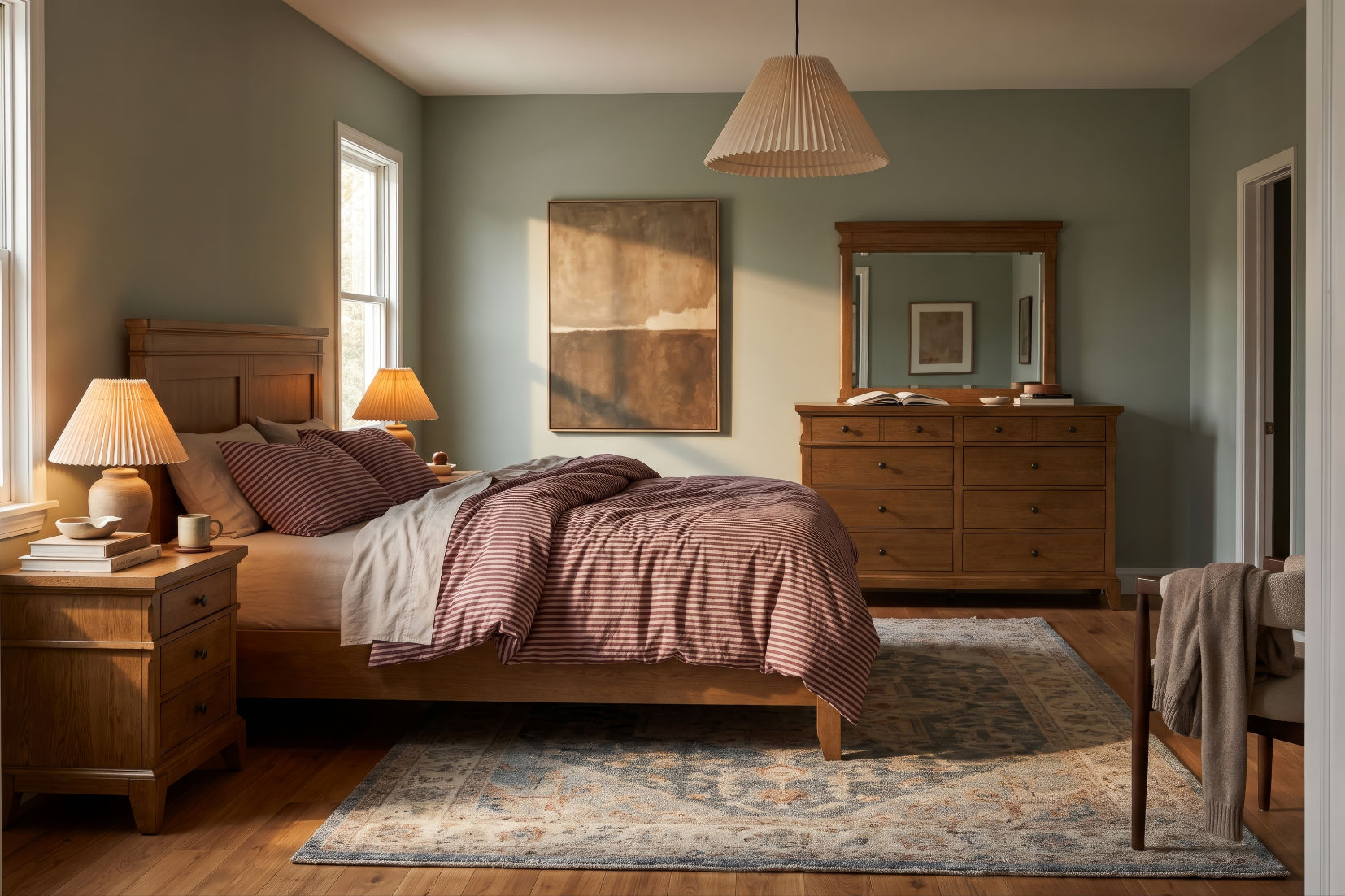
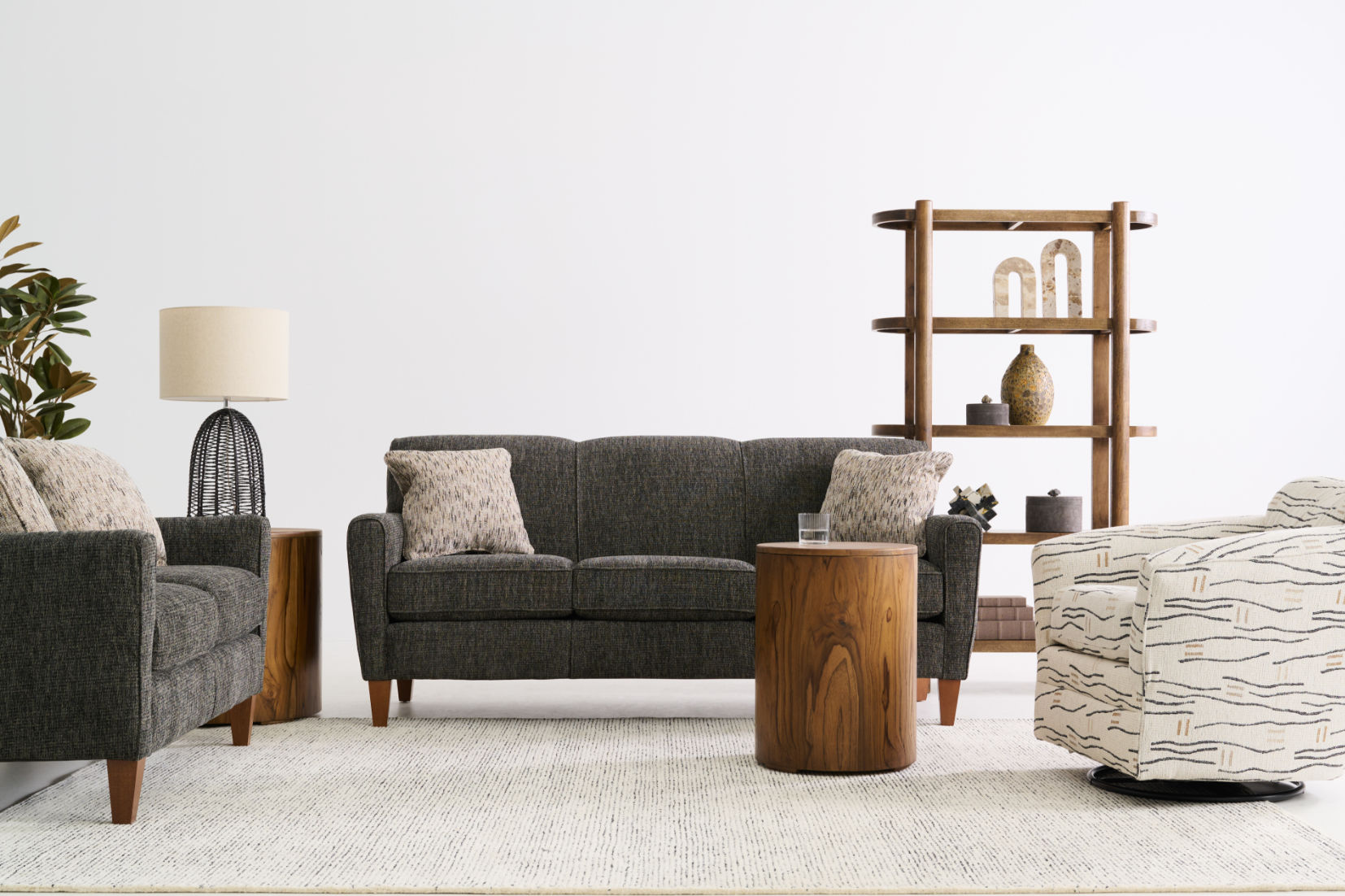
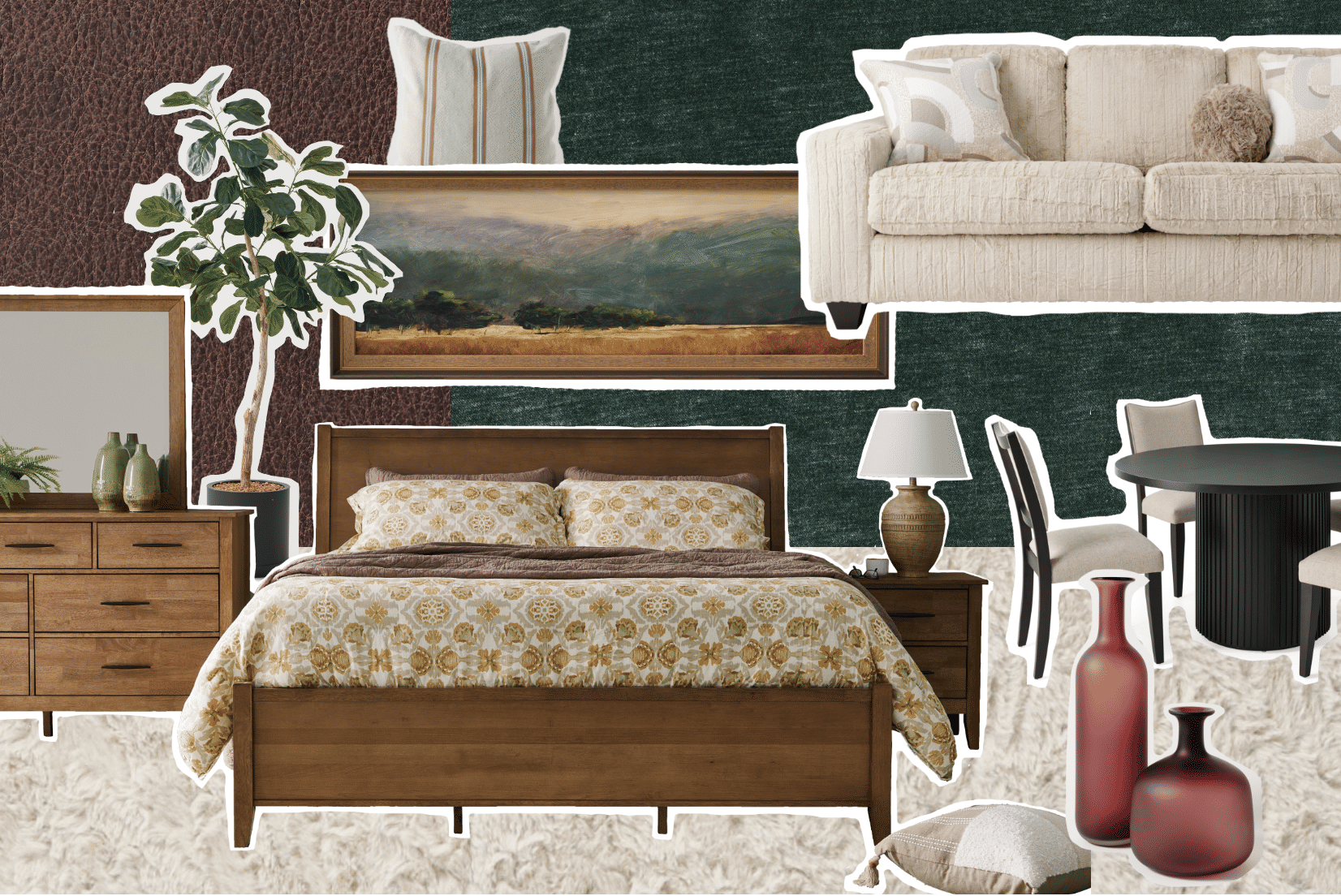
The 1970s are known for warm colors, groovy accents, and eclectic patterns. These fun takes on interior design embody a spirit of freedom. It's hard to ignore the impact these design choices had on the decades that followed, and on design today. Focusing on individuality and self-expression, the ‘70s focused on curating a home that reflected the people who lived there.
‘70s interior design styles are currently having a major resurgence. With warm tones embraced throughout homes, complemented by natural materials and vintage accents, this century of style is back on trend. Home design is shifting to reflect personality and creativity, the cornerstones that defined that decade.
If you’re looking to add a little ‘70s flair to your modern home or if you’re hoping to make your eclectic style a little more cohesive, we have a few tips to get you started. Like any design change, it may take time to achieve a space that feels cohesive, but with a few tips, your space can reflect the individuality of the ‘70s.
What Defines 1970s Style?
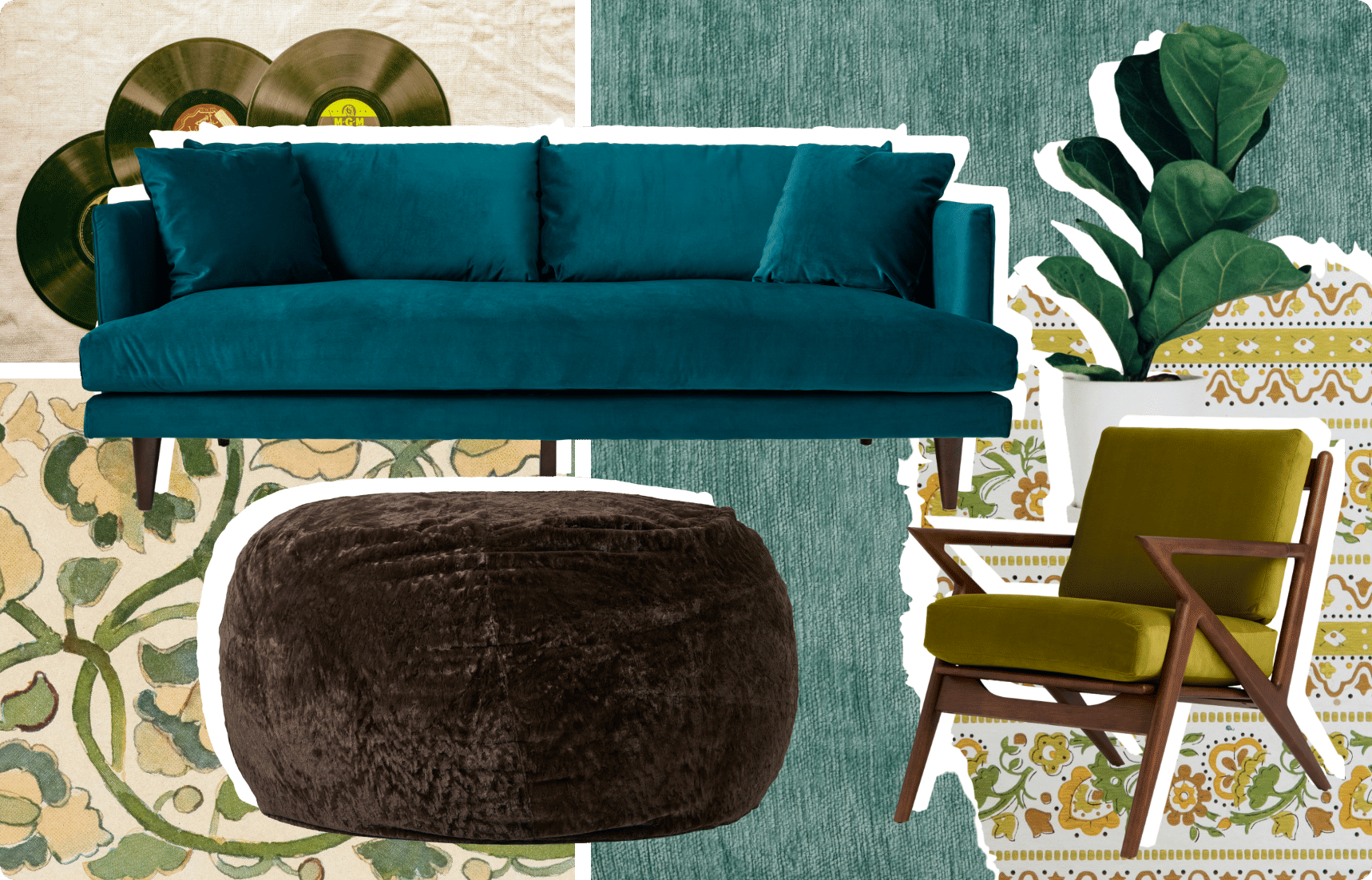
- Color Palettes during this period emphasized warmth and nature, with warm earth tones being the central focus. The most common colors used in homes included mustard yellow, avocado green, terracotta, burnt orange, chocolate brown, and rust.
- The Materials and Textures were natural and decadent, evoking warmth and comfort. Materials and textures included rattan, wicker, teak wood, velvet, corduroy, macramé wall hangings, and shag carpets, alongside brass and chrome accents.
- Specific Accents and Patterns of the ‘70s are iconic and synonymous with the groovy vibes of the era. With the most popular accents including mushroom lamps, lava lamps, sunken living rooms, conversation pits, geometric patterns, floral patterns, vinyl record players, and bean bag chairs.
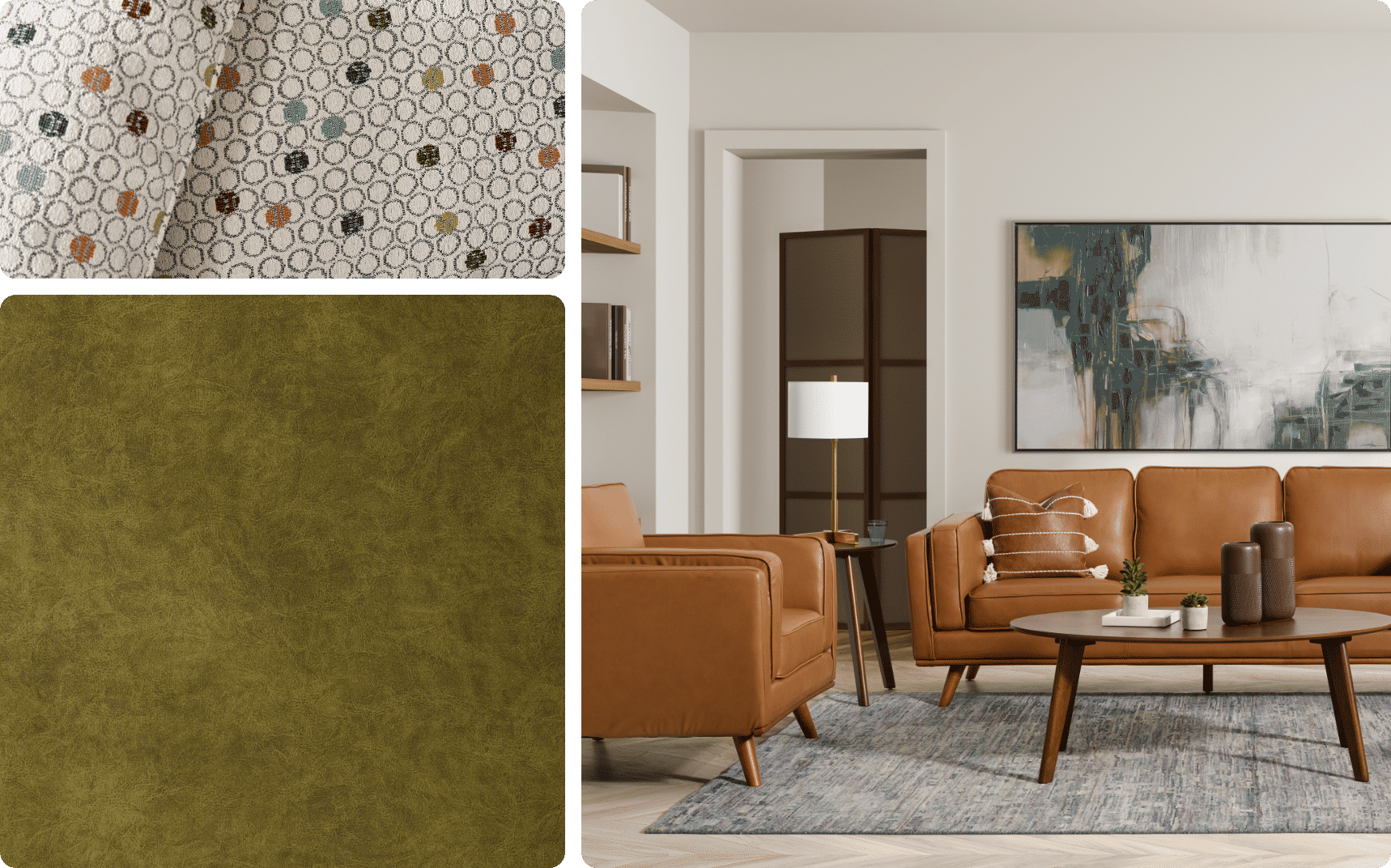
Tip 1: Embrace Warm Earth Tones
The patterns, textures, and colors of this time were fun, bold, and eccentric. However, when these elements were paired, the spaces they occupied still exhibited a sense of cohesiveness through a shared color palette. Bold yellows, blues, or oranges were mellowed out with more muted greens and browns. These combinations kept the spaces cheerful and inviting without being overpowering.
We recommend starting small before changing your home’s entire color palette. Subtle changes, such as switching out your lampshades, adding in decorative throw pillows, or placing a rug with some of the new colors in your preferred scheme, are great ways to add color without committing to a complete transformation. For more adventurous designers, painting an accent wall is a bigger, more impactful change, yet it has lower stakes because it can always be painted over.
Using warm earth tones in your home can evoke a sense of warmth and nostalgia. Pairing ‘70s colors with modern color palettes feels natural, grounded, and warm.
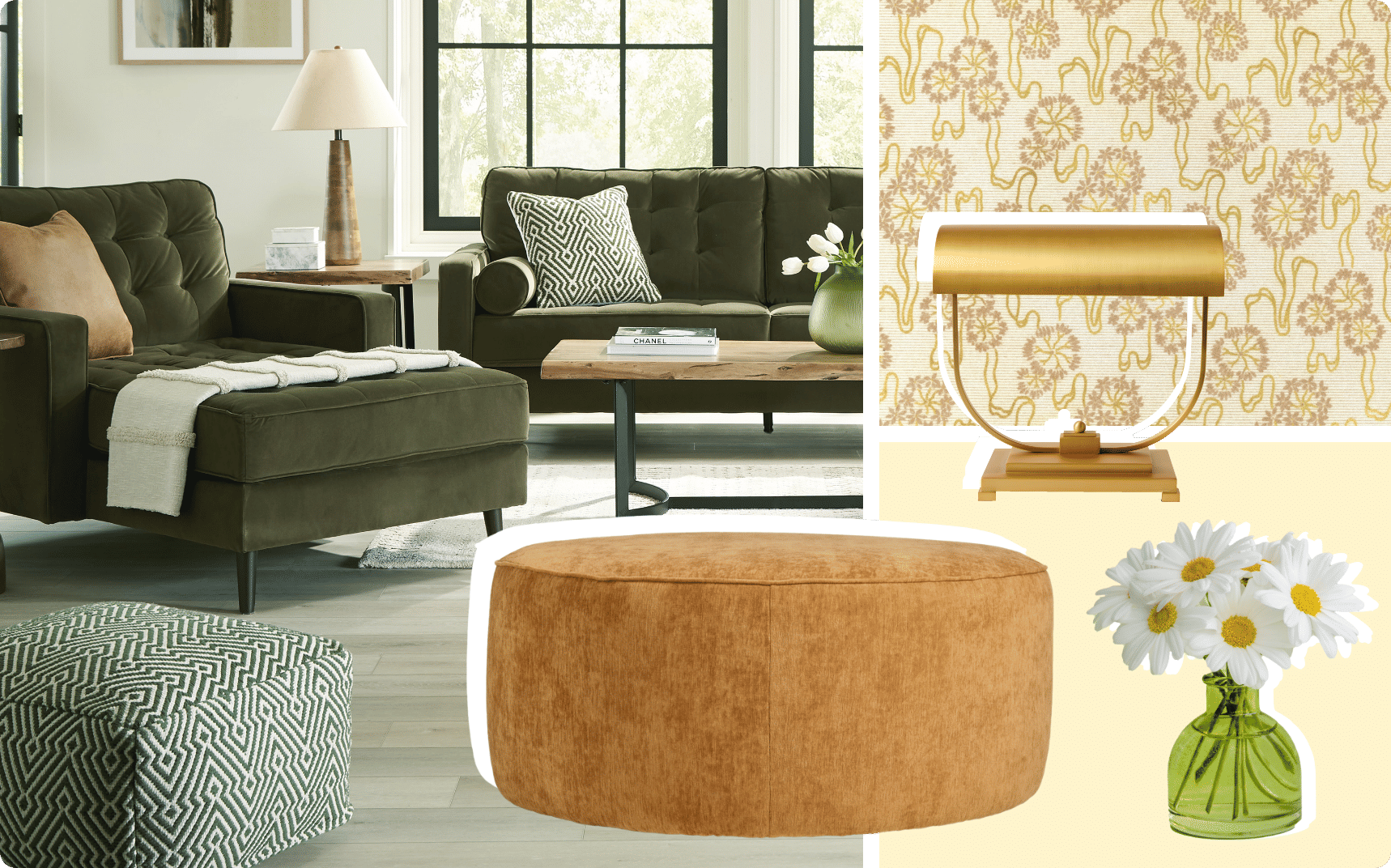
Tip 2: Layer Textures
Texture played a huge role in ‘70s interior design by adding visual interest to a room. Mixing textures like velvet or leather with woods helped to create a cozy, lived-in feel.
Macrame wall hangings, shag carpet, and velvet furniture were tactile and inviting.
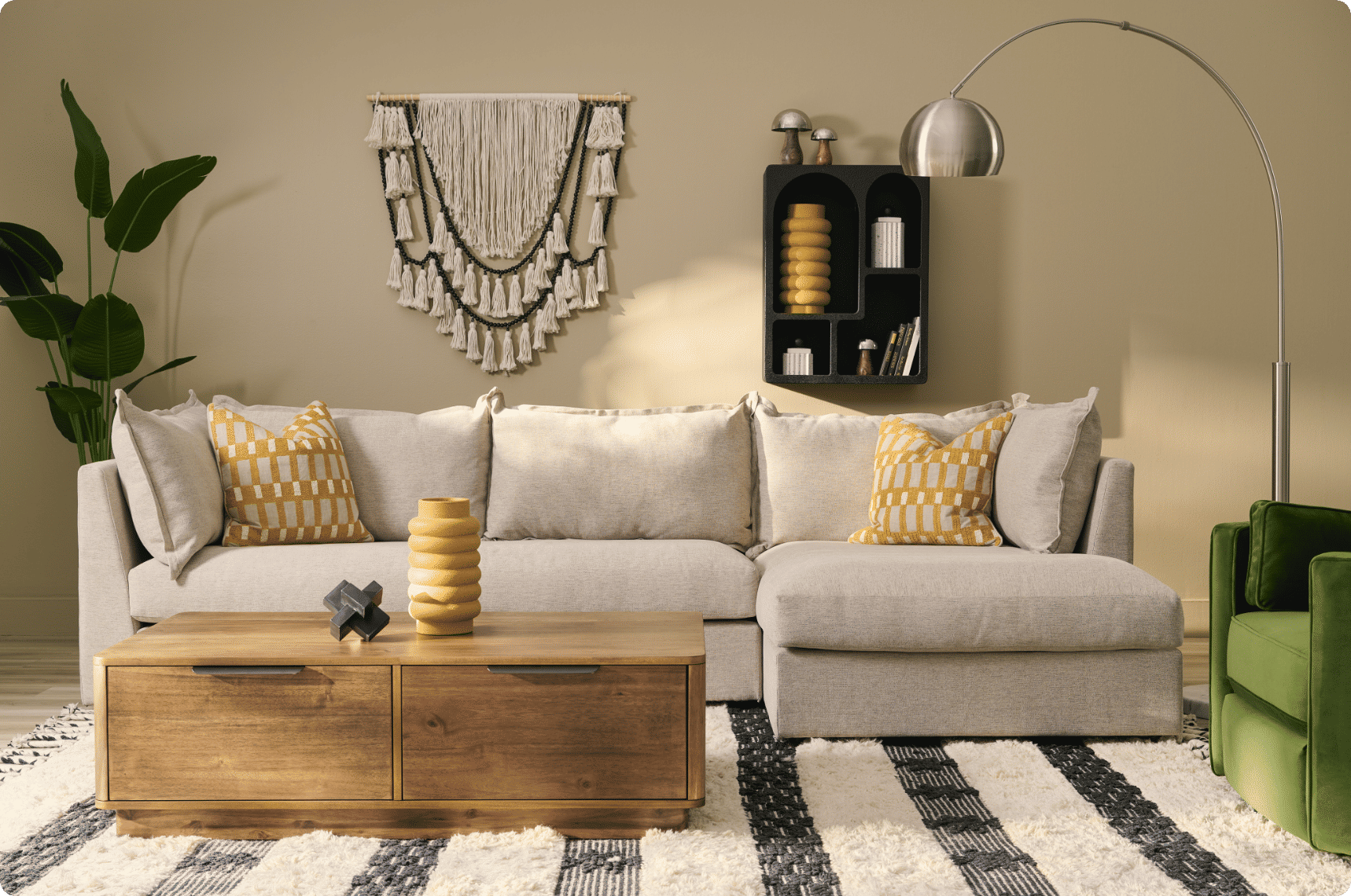
There is a fine line between mixing textures and overwhelming your space. To layer textures successfully, it’s best to maintain a balance between heavy and light elements. Fiber wall art, or a crochet throw blanket, can soften a space that may feel weighed down by a deep velvet sofa. Bouclé furniture, another staple of ‘70s design, adds a lovely sense of warmth and tranquility to any space, thanks to its unique texture that feels truly cozy to the touch. When textures contrast throughout the room, it gives visitors something new to look at as they move through the area. These tips for balancing textures can also be used in outdoor areas. Adding plush cushions and light linens to an industrial patio set can balance the visual tension of the set.
Hint: Shag carpets may feel dated in modern homes, but they can be revived through plush rugs in coordinating colors.
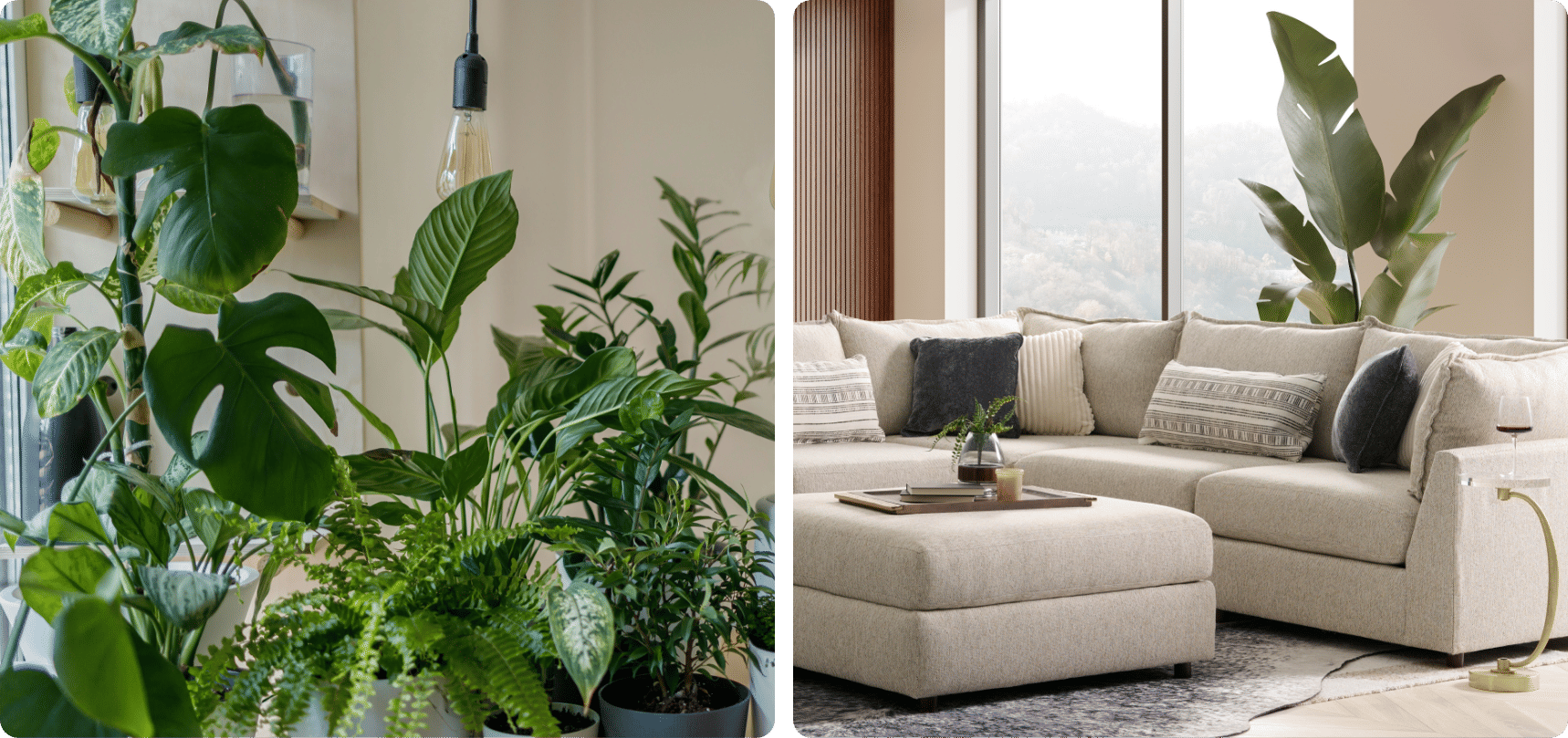
Tip 3: Add Plants
There is no such thing as too many plants. Maybe there is, but this wasn’t the mindset in the ‘70s. Plants add organic life, movement, and health benefits. The monstera plant was the unofficial plant of the decade, thanks to its low-maintenance nature and striking heart-shaped leaves with deep slits and natural holes. Boston Ferns and Ivy hung in planters, turning their unique textures and movement into additional decoration. Both are also relatively low-maintenance plants that embody the popular indoor jungle look of the time.
These popular 70s houseplants can also add additional greenery to outdoor spaces. Monstera plants, ivy, and ferns are excellent options for enhancing your outdoor area and turning it into an aesthetically appealing oasis.
Adding plants to your home can be overwhelming at the start, but there are beginner-friendly options that can ease some of the stress. However, if you’re lacking a green thumb or live in a home where keeping plants isn’t feasible, you could opt for faux greenery to still add that pop of green.
Tip 4: Unique Lighting/Accents
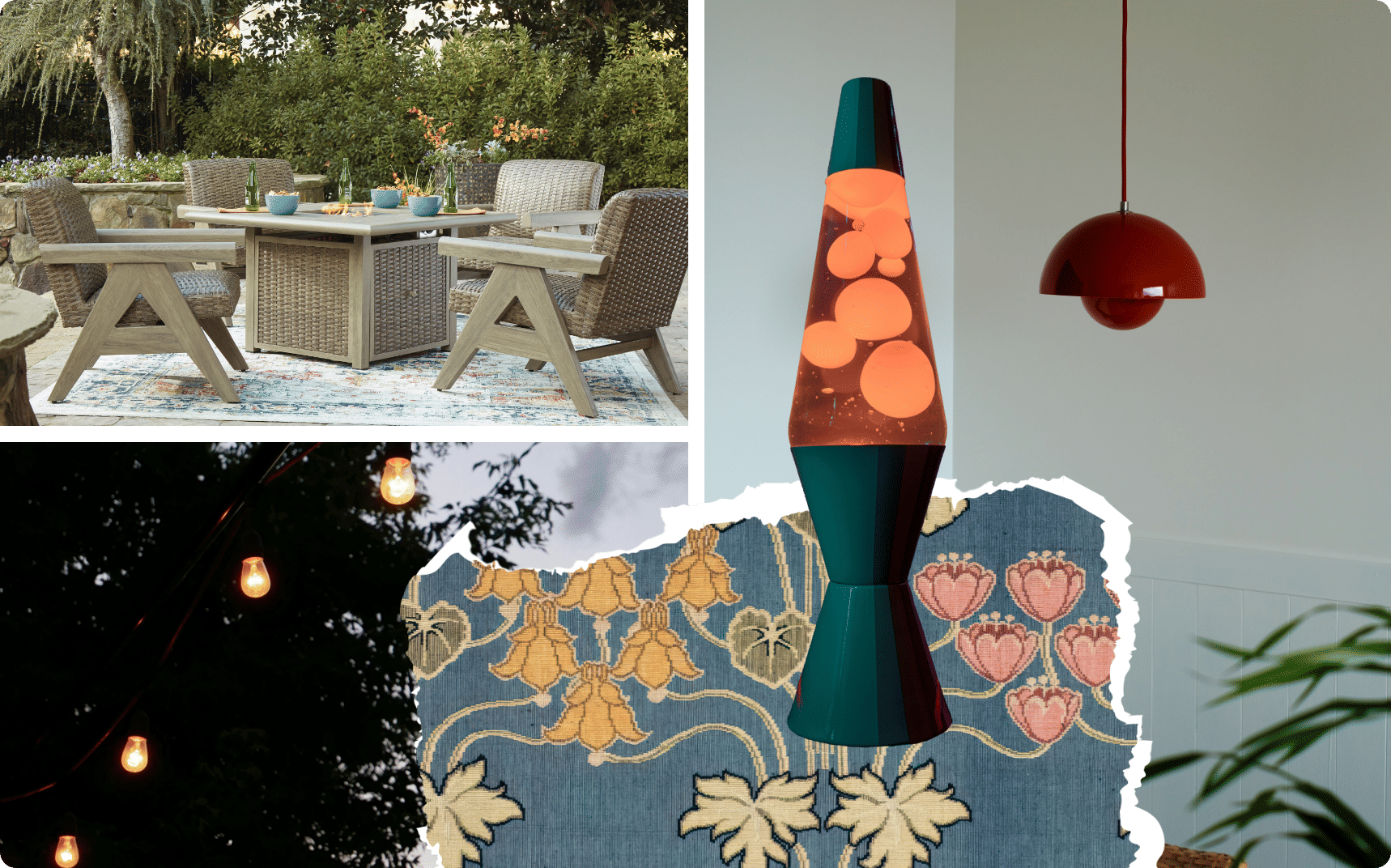
Lighting in the ‘70s was both functional and unique. Mushroom and lava lamps added a touch of whimsy and warmth to almost any room. Pendant lights set the mood for entertaining in the living and dining rooms, showcasing the home's personality with their unique shapes and colors.
Retro-style lamps are a small, easy way to add some ‘70s flair to your home. Statement lampshades made from materials like bamboo or rattan instantly add a touch of natural character. To make a larger statement, utilize pendant lights to add layers and personality. Vintage lamps and lampshades can also be found in thrift stores if you’re looking for more distinctive options. Shop your local Furniture Mart for more unique lighting options.
Lighting can also be used outdoors to infuse your space with warmth. Lanterns or string lights are a great way to create a cozy, inviting atmosphere. Firepits aren’t just useful for s’mores. They provide warmth in both literal and metaphorical senses and serve as a hub for conversation.
Tip 5: Include Natural Materials
There was a big return to nature during the ‘70s. This decade embraced the natural world and brought it indoors. Plants became statement pieces, warm earth tones prevailed, and natural materials helped ground even the most maximalist spaces. Warm woods like teak were paired with materials like rattan and wicker to tie rooms back to nature.
It’s hard to think of the ‘70s without rattan in the picture. This furniture reached its peak in the ‘70s, largely due to the popularity of the bohemian and “California casual” aesthetic. Rattan furniture carefully borders the line between indoor and outdoor, making it a great choice for pieces that can be used in both spaces. If you don’t want to commit to a full rattan set, you can incorporate it in small doses with side tables or light fixtures for a relaxed, natural look. Similarly, wicker can be used for its similar appearance and ability to function both indoors and outdoors, adding an inviting, natural texture to your spaces.
Teak is known for its richness and longevity. It rose in popularity in the 1960s with Mid-century modern designs and remained popular through the ‘70s, with uses ranging from furniture to wooden bowls. Vintage teak furniture is sought after by resellers and collectors alike. Today, teak is gaining popularity again due to its durability and warm tones.
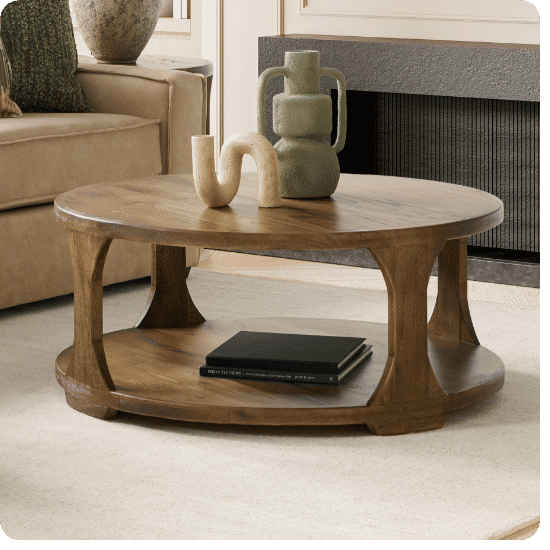
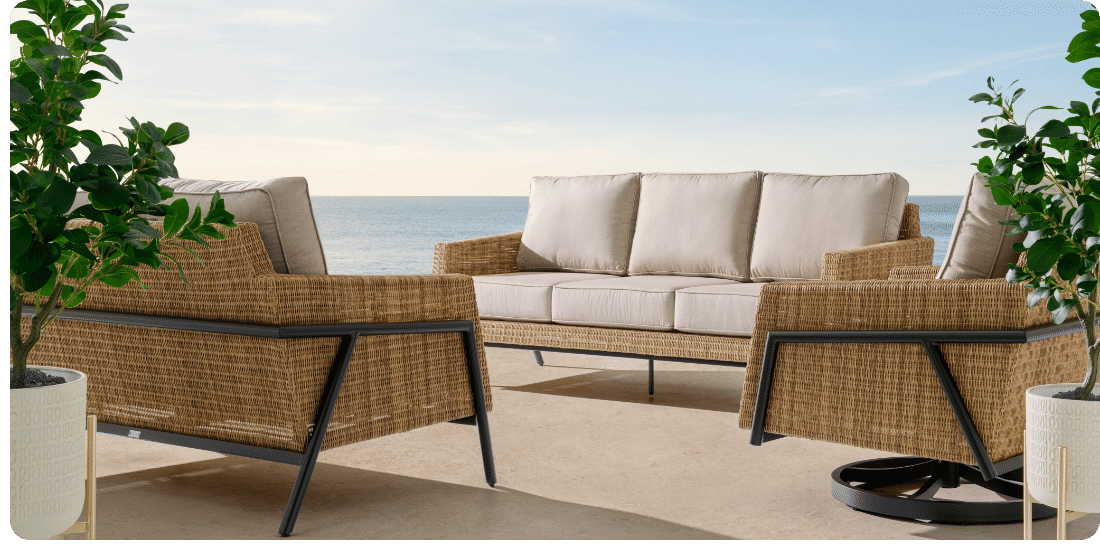
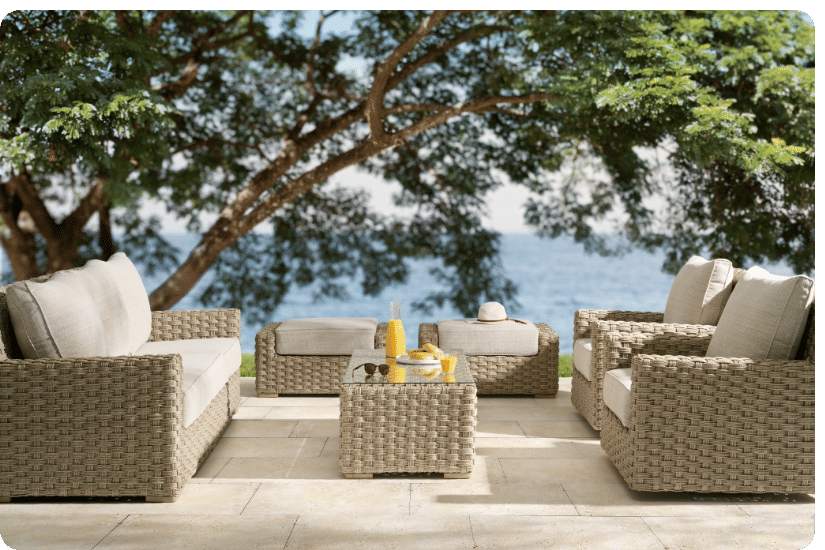
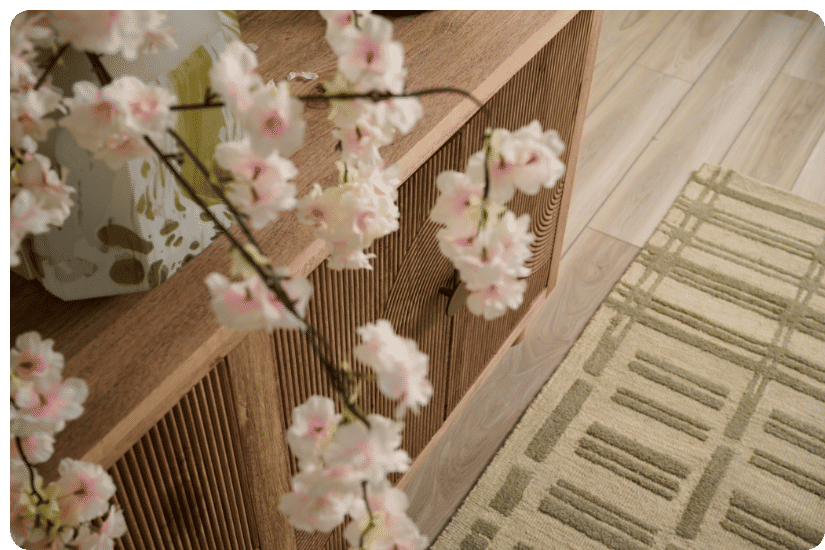
With minimalism and millennial gray dominating design for so long, it’s understandable that home decor is shifting away from neutral, minimalist styles toward warmer, more lived-in ones reminiscent of homes in the ‘70s. They leaned into over-the-top maximalism. Eccentric statement pieces had rooms built around them (i.e., conversation pits). Your home doesn’t need to be a complete ‘70s replica, unless that’s your goal, but you can still draw some inspiration from the decade to bring some character home.
Use fun colors and lighting, mix textures, and invest in pieces that bring you joy. There’s no wrong way to bring personality into your home. Embrace the fun, eccentric nature of 1970s interior design to make your home authentic and unapologetically you.